Sega Dreamcast Specifications
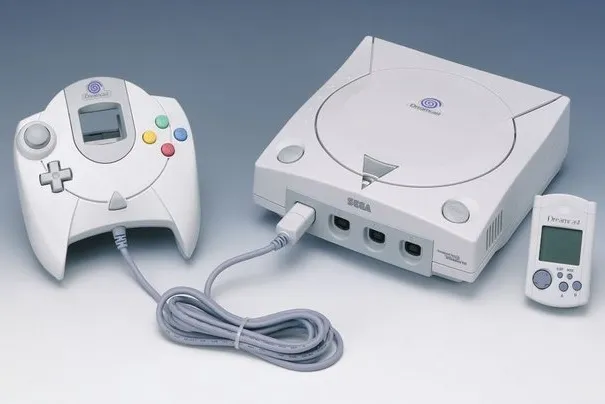
Launched at the very end of the 20th Century, the Sega Dreamcast saw many 21st Century innovations and concepts. Being the first 128-bit console when it hit the market which showed a tremendous improvement in 3D graphics over the previous 32-bit and 64-bit home consoles of the mid-1990s. The Dreamcast also was the first console to attempt a dual-screen setup with its memory card, the aptly-named 'Visual Memory Unit' which boosted a small, monochromatic LCD screen for dual-screen play. The Dreamcast especially pioneered in the field of online gaming, a novelty back in the 1990s. It came with a 33.6 or 56 kbits/s modem right out of the box and online capabilities were available starting from September of 2000 in the West. The Dreamcast also had the ability to play music CDs as well as VCD (video CD, a format that was popular mostly in Asia).
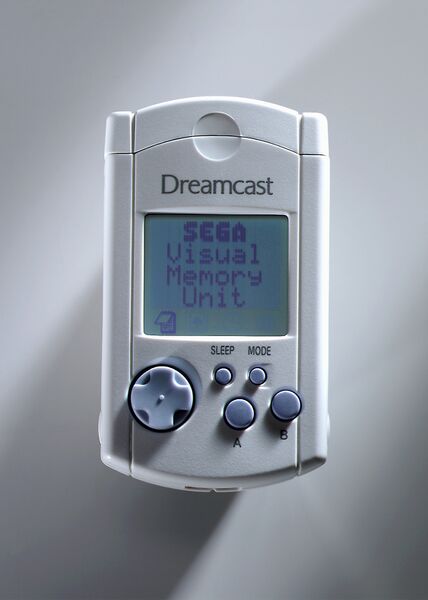
Probably one of, if not, the most unique idea for a memory card, the Visual Memory Unit had a small screen displaying information during gameplay while it was inside the front slot of the Dreamcast controller, it was capable of playing little minigames on the go (despite the abysmal battery life of the VMU) and of course, it saved your game data!
Visual Memory Unit (VMU) Specs
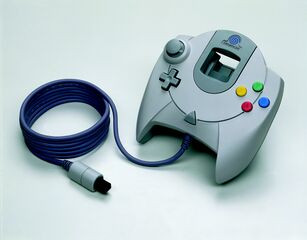
The Sega Dreamcast controller, with its futuristic spaceship design is at first glance is incredibly odd, the cord coming out from the bottom instead of the top, the lone analog stick in 1998 (the console was capable of supporting dual-analog) and the large cut-out for the VMU. It is actually possible to distinguish from North American and Japanese Dreamcast controllers from their European counterparts by the color of the swirl, red is the color for North America and Japan while blue was the color for Europe!
Sega Dreamcast Controller Specs
The Dreamcast boasted revolutionary graphics for the time, being the first 128-bit console of its generation. Learning from the mistakes of the Sega Saturn, the Dreamcast was easy to program for and very capable of doing 3D, boasting something between 3 and 6 million polygons. While this number sounds low in comparison to its other 6th generation console competitors, the Dreamcast optimized its polygon usage by only doing what the player sees in game, thus saving tremendous resources. Unfortunately, due to the Dreamcast's earlier development, it was to be the weakest of the four consoles of the 6th generation, slightly behind the PlayStation 2 and greatly weaker than either the GameCube or XBOX.