BACKGROUND INFORMATION

Part I - Beginnings: 1970s & 1980s
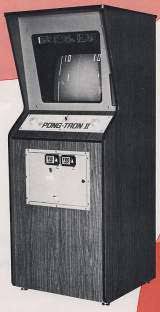
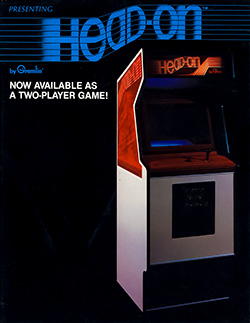
For this website, we will be skipping the history of Sega in the 1940s, 1950s, 1960s and most of the 1970s. In 1973, Sega released their first arcade game: Pong Tron, a clone of Pong by Atari from 1972, made solely for the Japanese market. Sega would mainly focus on the Japanese market but did release many Worldwide arcade games. Sega would make a series of arcade games in the late-1970s, namely, Head On from 1979, a game that likely inspired Namco's 1980 arcade-hit Pac-Man due to the similarities around dots. Sega would find much success during the 1970s and 1980s in the arcades.
By the early 1980s, Sega was one of the top-5 arcade game manufacturers. However, at the same time, the arcade market was to be hit by a severe downturn. This was mainly caused by oversaturation in the market, a desire to get more 'new' and innovative games and finally the loss of more casual players due to increased difficulty as well as natural disinterest over time. The arcade market would not recover until the early-1990s and the release of Street Fighter II in 1991. It was at this time that Sega began its entry in the home-console market. With corporate changes, ownership of Sega by Bally Manufacturing, and the introduction of Nintendo's Famicom (Family Computer) on July 15th, 1983, Sega was about to enter the home-console market.
Part II - SG-1000 & Master System
Pushed by Sega's president at the time, Hayao Nakayama, Sega's first console, the SG-1000 released in Japan on July 15, 1983, the very same day as Nintendo's Famicom. So in a sense, the rivalry between Nintendo and Sega literally started from day 1! The SG-1000 was to be later iterated as the SG-1000 II and finally the Sega Mark III which was sold as the Sega Master System in the West during the middle to late 1980s.
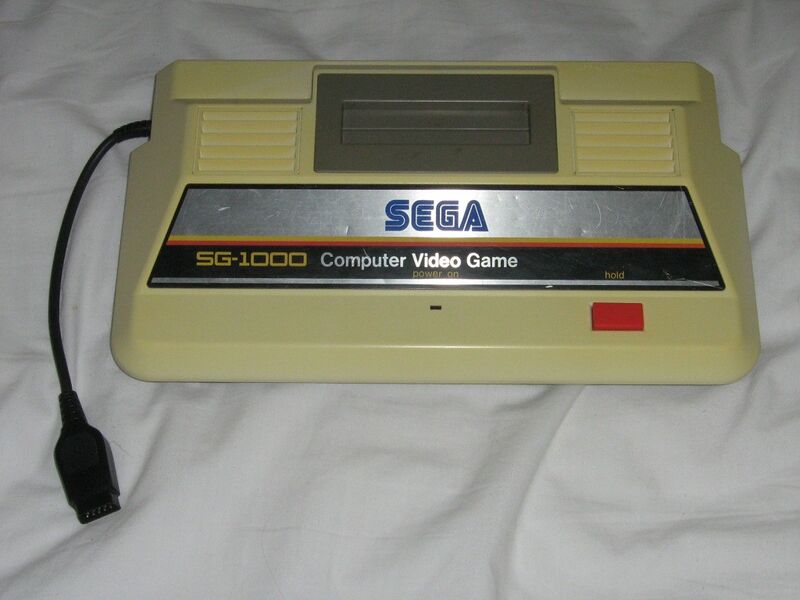
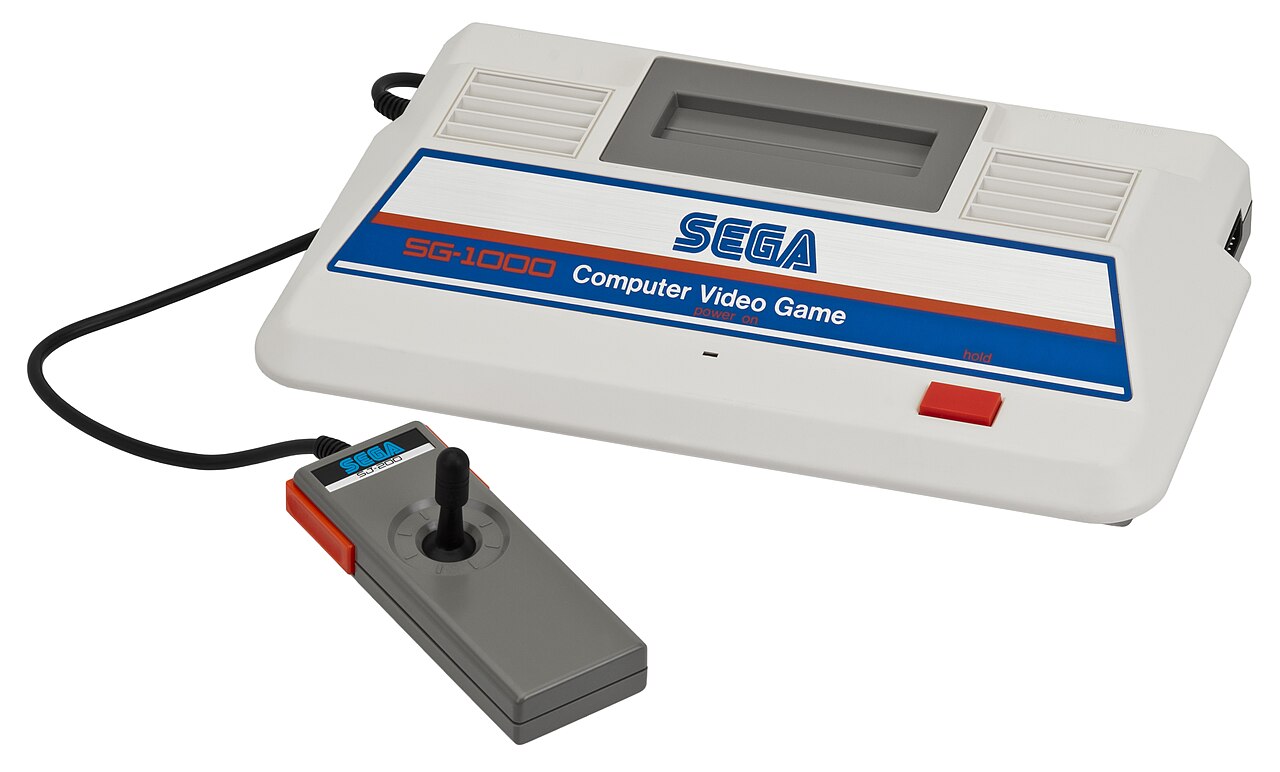
Initially, meaning the original July 1983 launch, the SG-1000 had a black-red-yellow front on white plastic design with labelling "SEGA SG-1000 Computer Video Game", however this was quickly changed for a (personally) more Sega appropriate blue-red front. The player one controller was hardwired, i.e., built-in the console which seems to be the norm at the time as seen with Famicon while player two was able to plug in a controller on the side using the same plug as the Master System and later the Mega Drive/Genesis.
Sega was surprised by the initial success of the SG-1000, the console finding a first streak of successes while the Famicom suffered setbacks. The SG-1000 broke Sega's expectations by 110'000 consoles (160'000 instead of 50'000) during 1983 massively aided by the higher amount of games, the SG-1000 received 21 games in 1983 while the Famicom only got 9 games. However, Sega soon found out that they lacked "heavy hitter" games that sold the SG-1000. The Famicom soon starting overtaking the SG-1000 in sales even with a system refresh, most notably with the detachable controllers, in July 1984.
Simply put, the Famicom was more powerful than the SG-1000 II, the SG-1000 II seemed weak and outdated when compared to the Famicom. Prompted Sega to begin development on yet another console (this will be a recurring issue for Sega), most notably being significantly more powerful than their SG-1000 series precedessors. This new console was to be based off of Sega's System 2 arcade boards and was named the Sega Mark III. The Mark III was released in October 1985. As will affect Sega's consoles until the Mega Drive/Genesis, this system would not sell well in Japan, however, little did Sega know that the Master System would sell well in some regions.
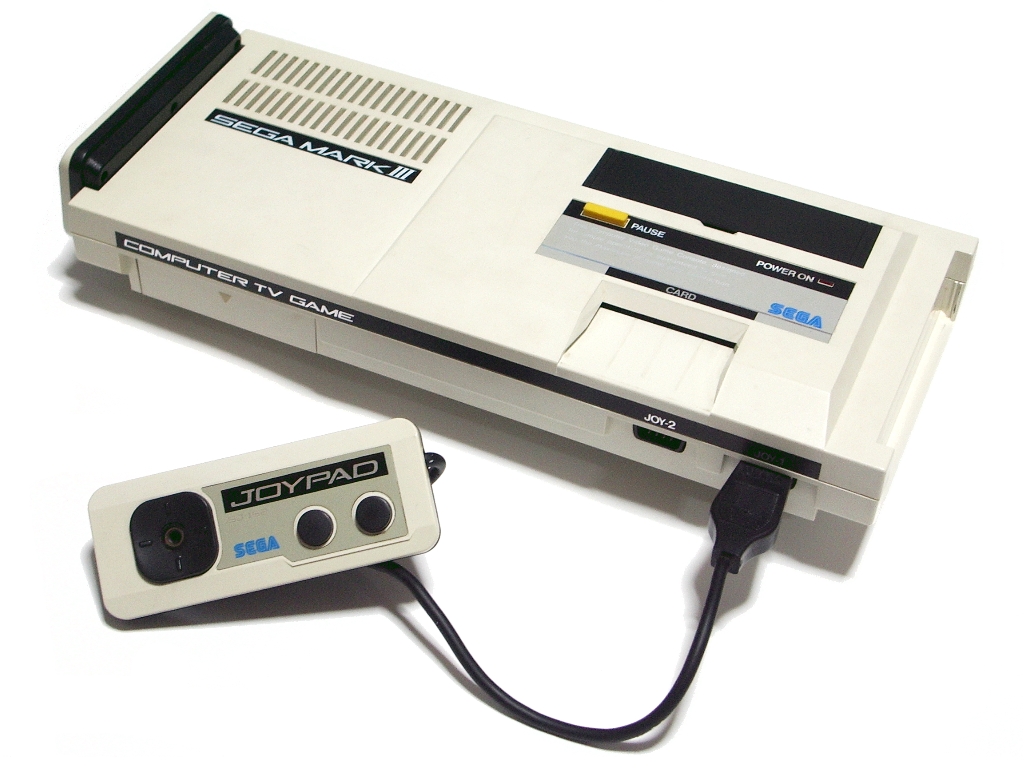
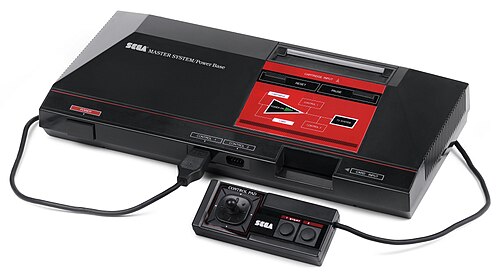
By 1986, the Mark III wasn't doing well in Japan and Sega hoped that they would fare better in the West where the Master System was released in September of 1986 for $200 (aroudnd $590-$600 in 2026). Unfortunately for Sega, the Master System massively undersold expectations partially hurt by the lack of third-party games for the system. At the time, Nintendo had some seriously monopolistic rules, if you made a game for the Nintendo Entertainment System, you could not port the game to any other console and since the NES was the more popular of the two, with a stronger consumer base, developers chose to develop for the NES instead of the Master System. Nintendo was winning in two major regions and both times by a massive margin.
In Europe, Sega released the Master System in 1987. Sega finally found success with their console. The Master System outsold the NES in most of Western Europe (Eastern Europe was still under communism), the only major countries in Europe where Nintendo seemed to have a lead were France and possibly West Germany. For example, in 1990 the Master System outsold the NES by a strong margin of around 300'000 consoles in Europe. Due to the Master System's success in Europe, the console received support until 1996 or so, well into the Saturn's life. More impressive than that, thanks to Sega's partnership with the Brazilian company TecToy, the Master System sold extremely well (Nintendo wasn't even there until 1993) where the console remained popular well into the 1990s and even the early 2000s.
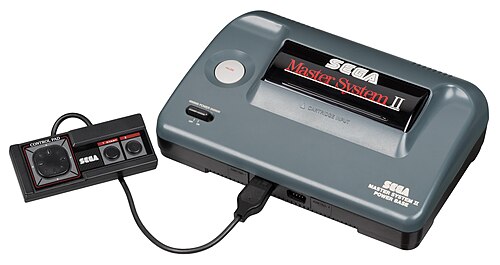
Unfortunately for Sega, at the end of the day, the NES outsold the Master System at a ratio of 6:1, selling around 62 million to the Master System's 10-13 million. As a result, Sega decided to pushed their next console with more powerful graphics and better everything in the late 1980s, mainly due to the Master System's failure in Japan and North America. A cheaper version of the Master System known as the Master System II was released in 1990, which reduced costs by removing the Sega Card slot and slimmed the console down. That console will be the subject of the next part.
Part III - Sega Genesis/Mega Drive
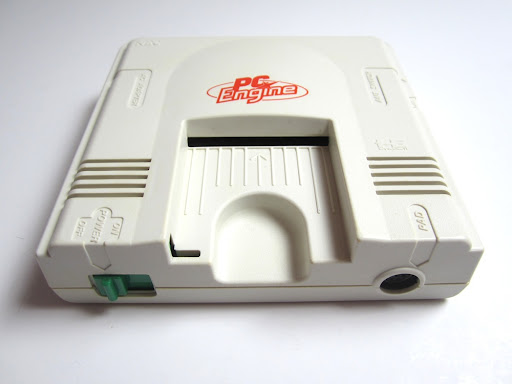
By the mid-to-late 1980s, it was clear that Nintendo was dominating the console market and something drastic needed to be done in order to break that dominance. Sometime in 1986, Sega started development on a new, more powerful console, this rush was further pushed in October 1987 with the release in Japan of NEC's PC Engine a 16-bit console. It was in this environment that the Sega Mega Drive/Genesis was created. The entire development of the Mega Drive/Genesis isn't the focus of this site however, for its time, it was an advanced console.
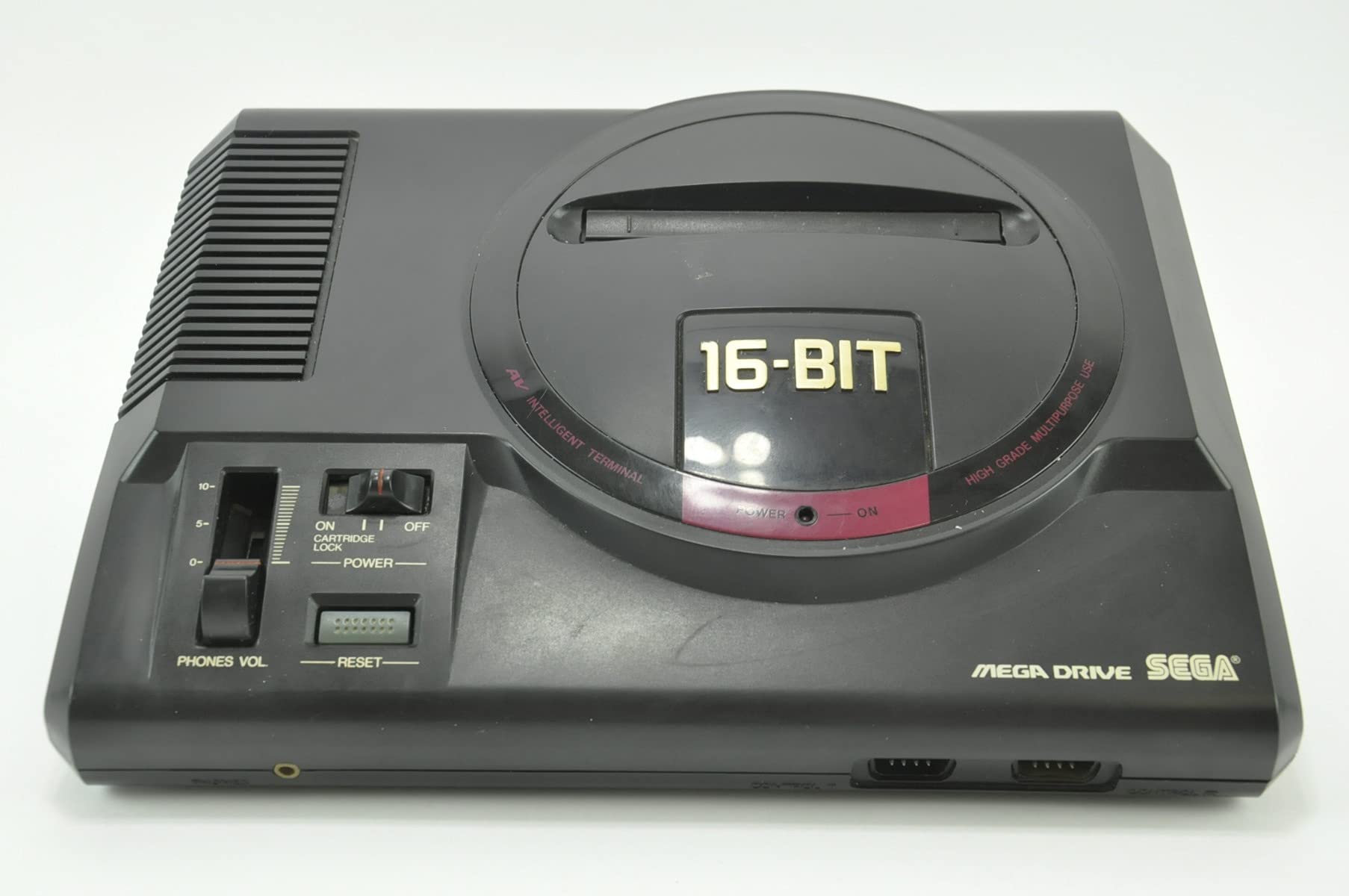
The new 16-bit console's styling was strongly inspired by late 1980s audio equipment, especially the higher-end stuff. The console would also benefit from its "cooler" aesthetic especially compared to the more-kiddy looking NES. The Mega Drive/Genesis maintained its black coloring from the Master System days. The new console released in Japan as the Mega Drive in October 1988 and was unfortunately overshadowed by the much-anticipated release of Super Mario Bros 3 for the Famicom. This was only a minor setback as the console did in fact sell-out quickly and sold about 400'000 units in Japan by the end of 1988.
The Mega Drive wouldn't be the massive success in Japan that Sega wished it would be, in fact, it remained a distant third place, a position which humiliated Sega of Japan and would affect their decisions in the late-Mega Drive and the Saturn eras, especially in regards to a Sega of America & Europe vs Sega of Japan rift. Sega shifted their focus on the Western market, North America and Europe. They proceeded to release the Mega Drive in North America in September of 1989. The name was changed to Genesis, the reason why isn't fully clear, the first is that one of Sega's founders didn't like the name "Mega Drive" while the second leans more into the copyright issue with another company being named "Mega Drive", personally the second theory seems to be more likely.

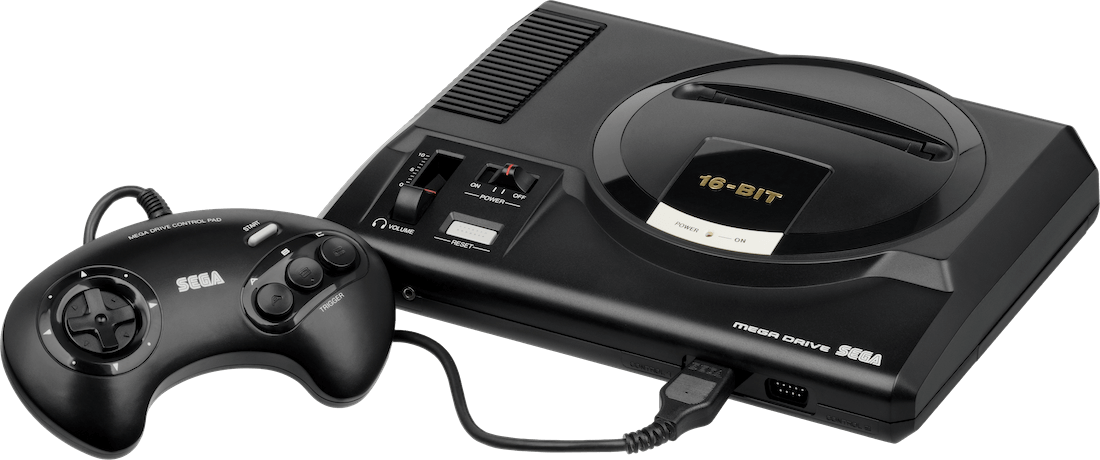
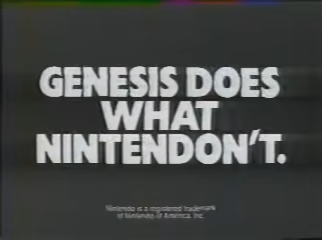
In North America, the Genesis initially somewhat struggled through 1989 and 1990, the console underperformed expectations by about half. Luckily for Sega, NEC, whose PC Engine (Turbograpx-16 in North America) had actually managed to keep the second position in Japan was doing atrociously in North America. In September of 1990, the Mega Drive was finally released in the Master System's strongest region: Europe. The console would hold the number one spot in Europe. Sega was massively helped by the late release of the Super Nintendo Entertainment System (SNES), in 1990 in Japan, 1991 in North America and finally 1992 in Europe. Nintendo was stuck with their rapidly ageing NES in the early-1990s. Things were made worse for Nintendo when Sega changed leadership and started being far more aggressive. This is when the famous "Sega does what Nintendon't" commercials came into play. Sega had fired the first shot in the "console war" and finally the next, and arguably the biggest blow to Nintendo was the release a game called Sonic the Hedgehog in June 1991 giving Sega a mascot who was better than Alex Kidd.
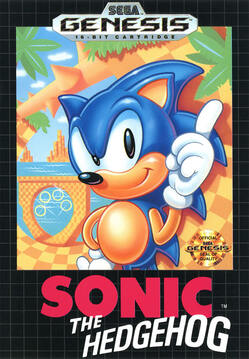
This one-two punch gave Sega a massive boost during the holiday season of 1991, in fact Sega decisively won with consumers that year. The console war had officially begun, with Sega and Nintendo fighting to win over gamers on the fence with the best possible gaming experiences. The two consoles also represented two completely different "vibes". Sega was cool, edgy, had tons of attitude and appealed to teens while Nintendo was friendly, wholesome and appealed to kids. It was a miniature culture divide in gaming, Nintendo was red so Sega was blue, Nintendo's consoles were white so Sega's were black and so forth. The argument was mainly over first party titles from each company. Technically speaking, the Genesis was the inferior console with weaker hardware and noticeably worse sound however this is best left to subjective opinion.
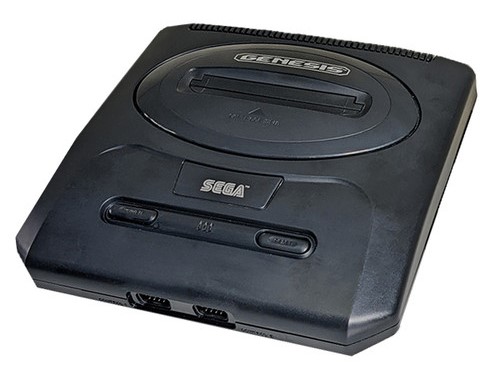
Sega continued to hold the lead in 1992 and 1993 in Western markets while Nintendo held their solid lead in Japan, that same year, 1993, that the Genesis/Mega Drive saw a revision, shrinking the console. removing admittedly superfluous things like the headphone jack and the volume slider. They also used cheaper parts so its clear this was to further reduce costs for both Sega and the consumer. It was also when the famous 6-button controller was released, mainly for 2D fighting games. 1992 also saw the release of Sonic the Hedgehog 2 the second best selling Sega game with around 7 million copies sold and is often considered the best of the 2D Sonic trilogy.

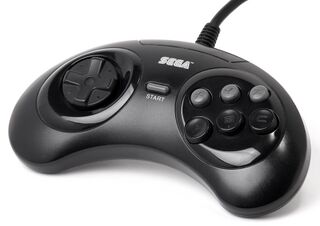
By this point, Sega had a considerable library of top-tier games, of course they had the Sonic games, Streets of Rage, Ecco the Dolphin, Shinobi, Phantasy Star and so forth. However, the hardware by 1993 was 5 years old and Sega wanted to extend the life of the Genesis/Mega Drive. They actually attempted to do this twice, once in 1991 and the second time was in 1994, this will be covered in Part IV.
Part IV - Stupid, Pointless Add-ons: Sega CD & 32X
The first of these "life extensions" was the Sega CD whose story starts with two things, the increasing affordability and popularity of the CD-ROM and NEC's PC-Engine CD-ROM add-on. The former was viewed as the future of gaming, providing CD quality audio (which was better than what a cartridge could provide) and substantially lowering the price of games. Cartridges were (and still are) a lot more work to make, requiring boards and cases while a CD can be pressed relatively quickly and inexpensively. As mentioned before NEC released a CD-ROM add-on for their console and there were rumors that Nintendo was making a Super NES CD-ROM which never came to fruition but led to Sony's PlayStation. This competitive pressure pushed Sega to develop and make the Mega CD (or Sega CD in North America) in 1991 in Japan, 1992 in North America and finally 1993 in Europe.
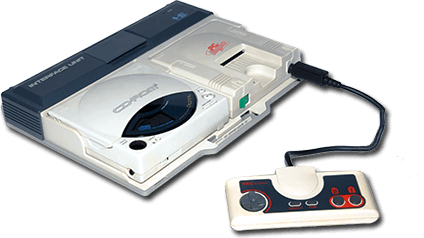
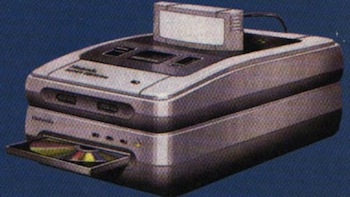
In terms of specifications, the Sega CD added another, faster CPU, an extra sound chip, an extra 768 Kilobytes of RAM and essentially doubled the power of the Genesis/Mega Drive. The Sega CD was also capabable sprite scaling and rotation which Nintendo replicated with their FX chips used in Super Mario World 2: Yoshi's Island as well as Mode 7 games. The Sega CD brought CD-quality audio to gaming providing gamers with orchestrated game soundtracks. Another CD-era bonus which Sega thought was the future of gaming (thankfully not) was full motion video (FMV). The Sega CD would have two models essentially being made for each model of Sega Genesis/Mega Drive, the Sega CD and the Sega CD 2.
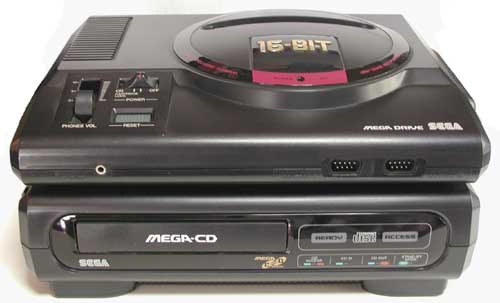
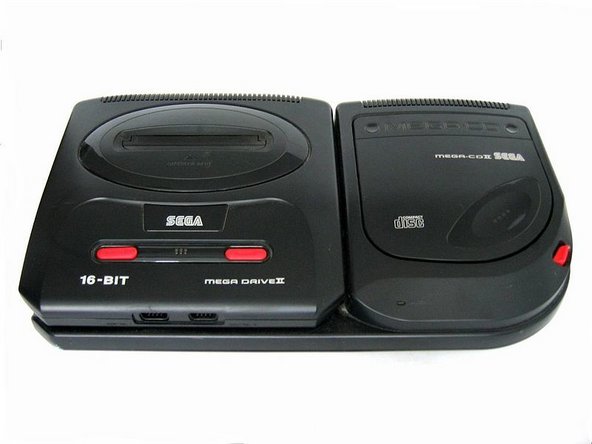
As we've seen with the consoles previously, the first iteration of the Sega CD was more 'premium' having a drawer/motorized tray that goes out while the Sega CD 2 was a more conventional 'top-loader' disc drive system. Other than that however, the versions are identical, the Webmaster prefers the first iterations of the Sega CD by a country mile. The Sega CD was moderately successful by add-on standards, selling around 2 million units and getting around 200 games. The next add-on was to be a disaster that would tarnish Sega's legacy.
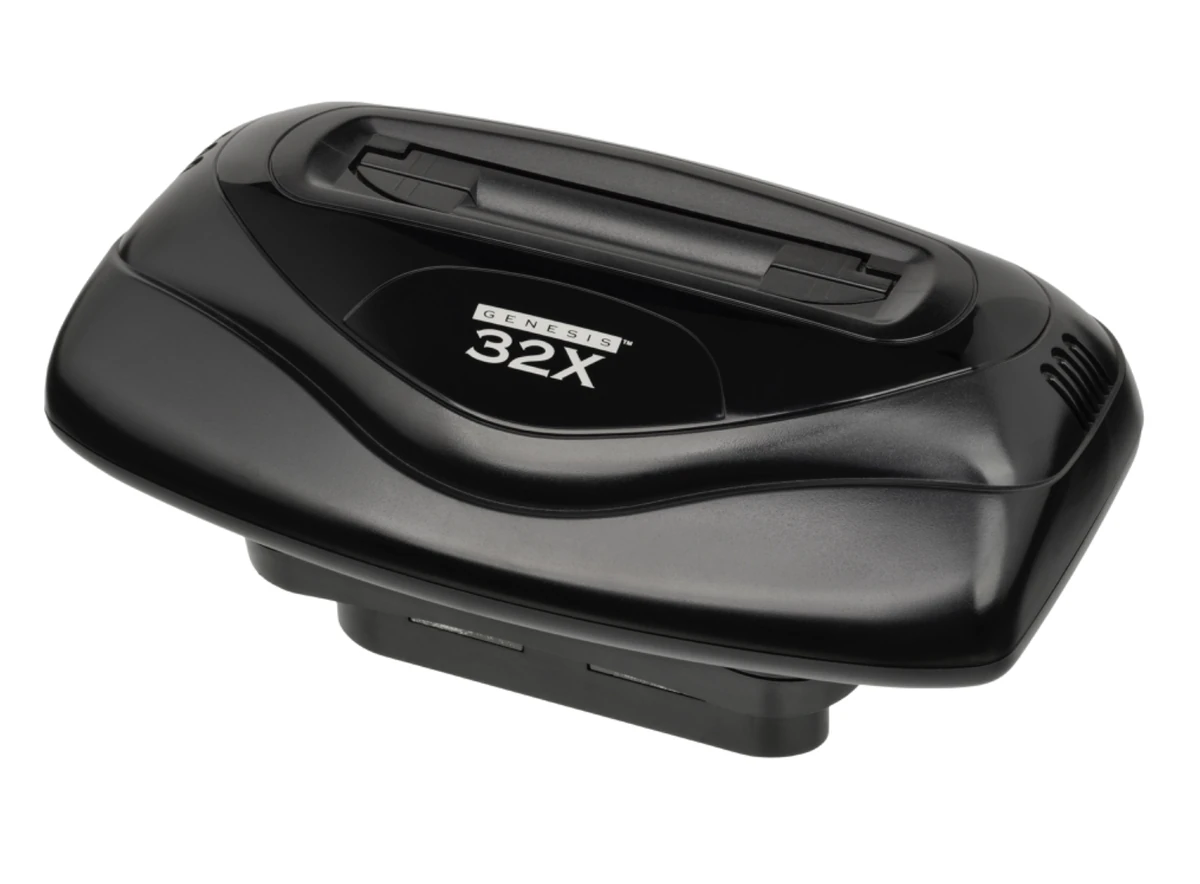
This next add-on is the Sega 32X. Releasing in 1994, the same month that the 32-bit Saturn released, Sega of America wanted to give the Genesis a much-needed boost of life by allowing it to enter the world of polygons all while giving gamers a cheaper alternative to the proper 32-bit Sega console. It also served as a stop-gap before the Saturn hit storeshelves. The 32X's hardware was essentially what the Saturn had, the two SH-2 processors just weaker. While as mentioned the Sega CD sold well and was supported until around 1996, the 32X didn't even hit 1 million (mind you some 40-odd million Genesis/Mega Drive consoles were sold). Sega of Japan was fully interested in their new console, the Saturn because they had wanted to move on from the Mega Drive as it wasn't popular in Japan. This entire situation hurt Sega, the internal fighting, wasted funds and consumer mistrust.
However, despite all these setbacks, the venerable Genesis/Mega Drive was still immensely popular in the early-to-mid 1990s. It held the lead in the Western markets until around 1995 when the Saturn was already out. The Genesis/Mega Drive got its last batch of top-tier Sega titles in 1994 and 1995 with Sonic 3 and Sonic & Knuckles, Comix Zone, Vectorman and Ristar to name a few, note that these (except for Sonic) were all Western developed as Japan went all-in on the Saturn. Now one of the biggest questions of the time and still today was: "Who won the console war?" and this is interesting. Nintendo sold 49.1 million Super NES consoles to Sega's 35.5 million, now in my view, this is almost entirely margin from one region: Japan, Sega only sold between 3 to 4 million, Nintendo sold almost 20 million. Sega of Japan was essentially humiliated on home turf and they desperately wanted to move on. For what it's worth, the Webmaster believes that in North America and Europe, Sega held a narrow lead. With that said, we will move onto the Sega Saturn!
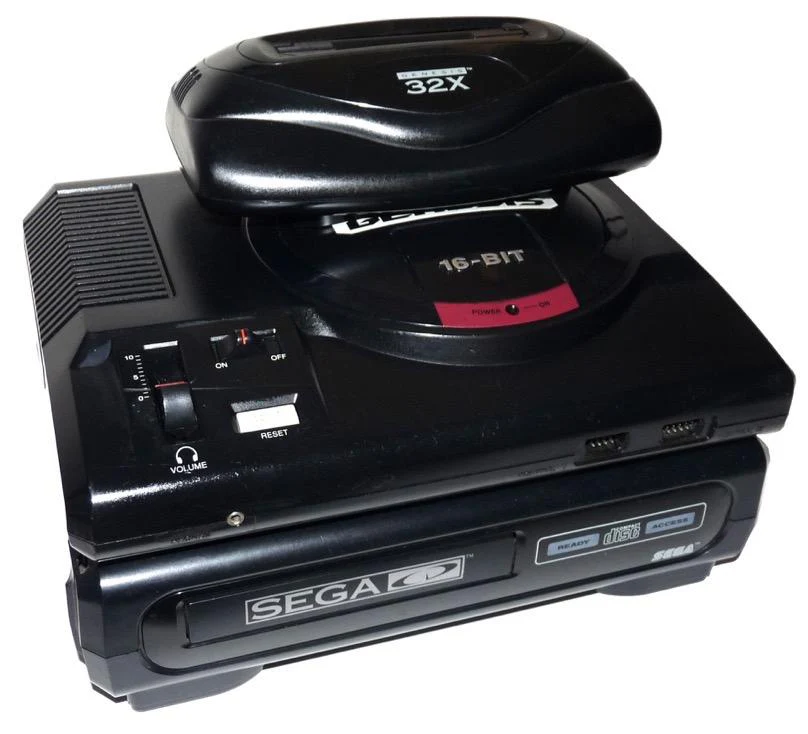
Above is an image of the TOWER OF POWER!
Part V - Disaster of the Sega Saturn
At the same time as the development of the Sega 32X, Sega was working hard on their new 32-bit console, the Saturn. Originally intended to be mostly a 2D console with select 3D elements, upon realising that 3D was the future, Sega ended up giving the console a second SH-2 processor to give the console the power to properly do 3D late in development, mostly due to Sony's incoming PlayStation. This made it more difficult to develop for the Saturn, a problem that would hamper the console throughout its life. Sega first released the Saturn in Japan on November 22 1994, the day after the North American launch of the 32X. The Saturn turned out to be quite successful thanks to a good port of Virtua Fighter. The initial Saturn launch went well despite the lack of launch titles, only 5 including Virtua Fighter. The first batch of 200'000 Saturns sold out on that very day.
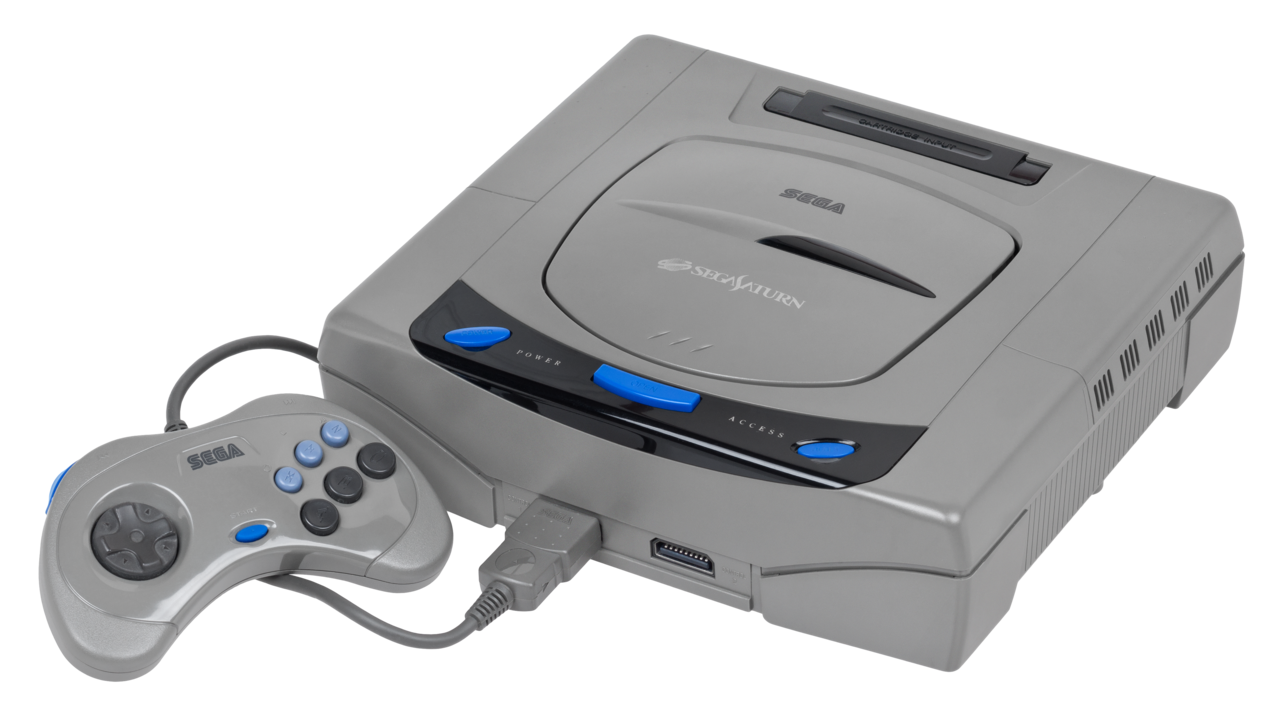
The first model of Sega Saturn was grey with blue buttons, a big departure from Sega's typical shiny black look for their consoles. The Saturn was advanced in many aspects. The console came with a CR-2032 battery port, which was easy to replace unlike the later Dreamcast, which dealt with game saves. The Saturn also had a cartridge port for more long-term saving, this cartridge port also gave the Saturn extra RAM (1 MB and 4 MB cartridges existed). The Saturn also came with the ability to accept a peripheral at the back, next to the battery which gave the console VCD (Video CD) support. As seen before, Sega made many interesting decisions with the Saturn, one of the most important was their decision to use quads over tris (tris would become the industry standard). Unfortunately, all these features did make the Saturn more expensive than the PlayStation but the Saturn outsold the PlayStation during 1994, with 500'000 consoles to Sony's 300'000. However, that 200'000 margin would shrink as by May-1995, the Saturn was outsold 2-to-1 by the PlayStation.
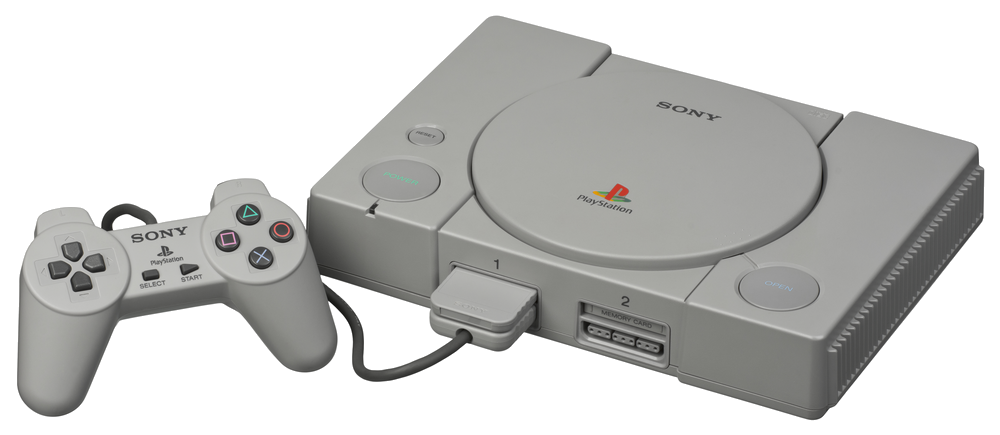
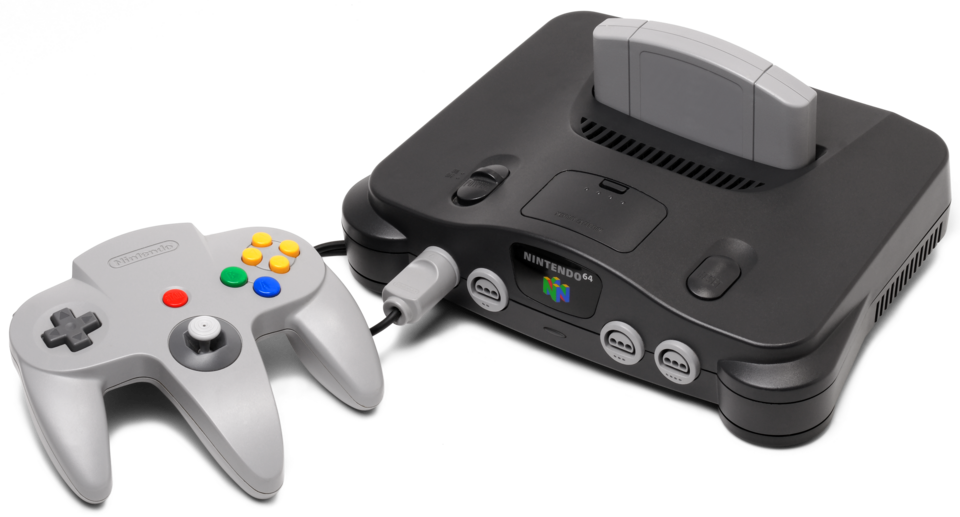
The unexpected success of the PlayStation in Japan took Sega by surprise and strongly affected their decision-making. The North American launch was originally intended for September 2, 1995, "Saturnday" but pressure from Sega of Japan pushed Sega of America to announce at E3 that the Saturn was available in stores in May of 1995. While the intent was to give Sega and the Saturn several months' lead over the PlayStation in terms of sales and games, it backfired. The console's high price, at $399, limited game selection of only 6 titles, lack of hype as the months leading to September 1995 would've been for marketing the console and the issues with getting the console to retailers.
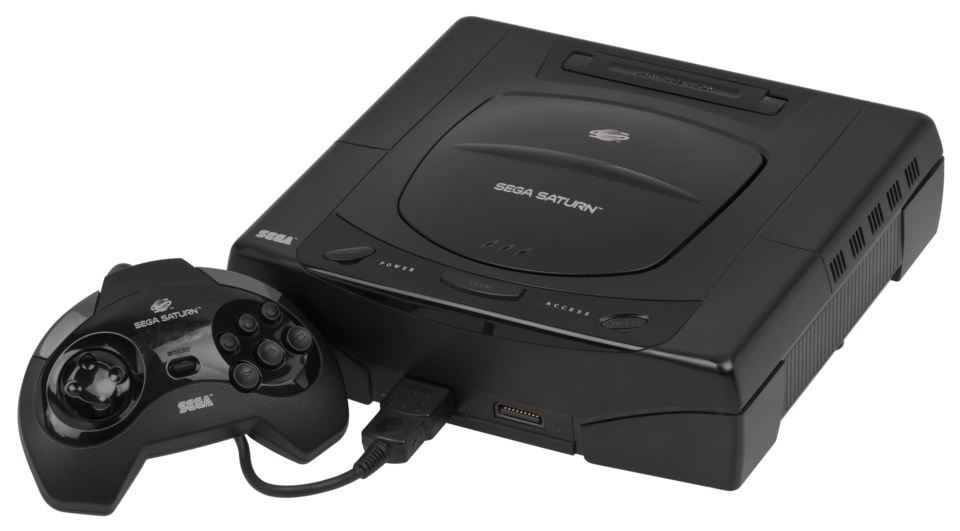
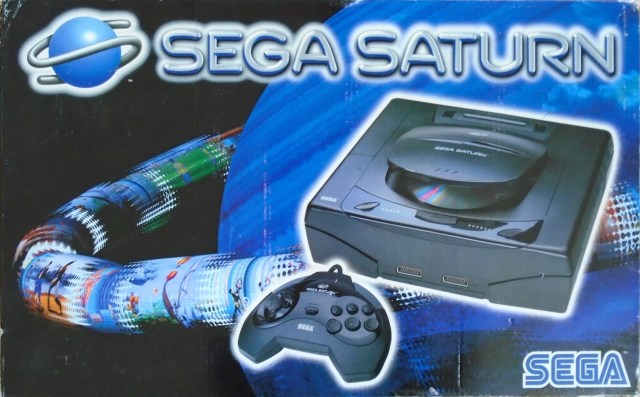
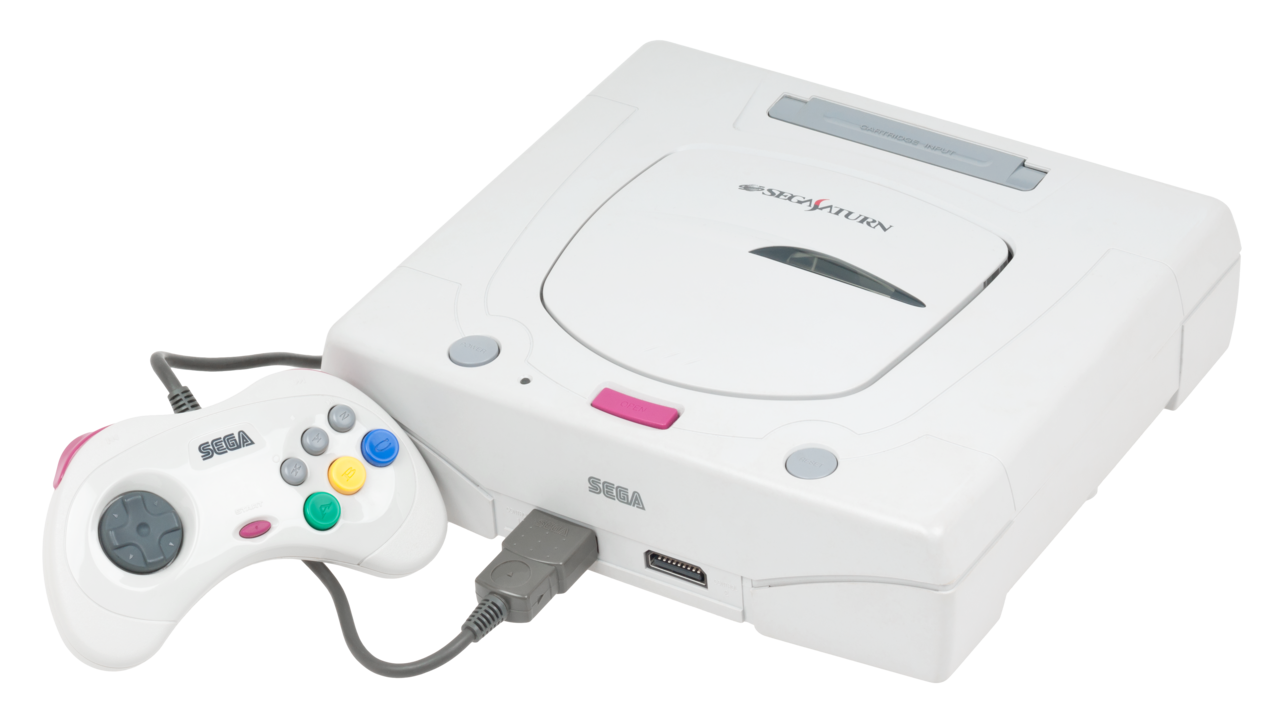
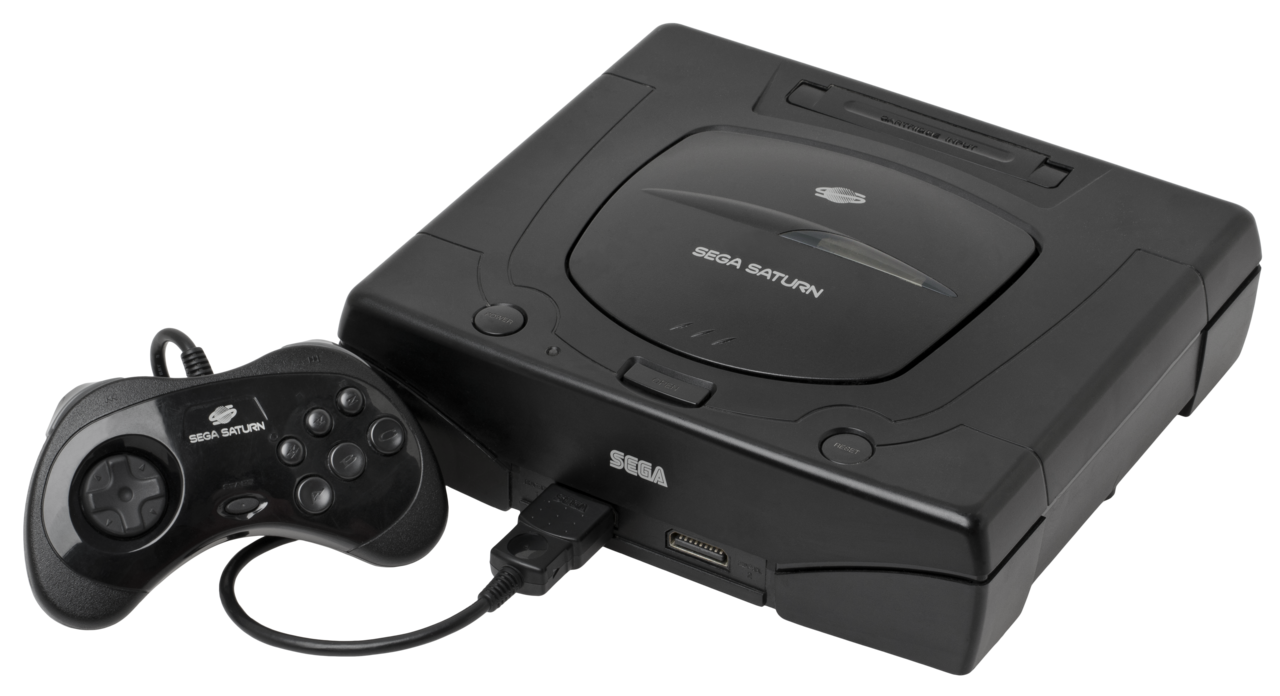
That 5 month lead was destroyed almost immediately by the PlayStation which was $100 cheaper. Both Daytona USA and Virtua Fighter got second, better versions as the first versions were full of bugs and framerate issues. By early October, Sega had dropped the price of the Saturn to $299 in an attempt to sell more consoles, this action did help during the holiday seasons of 1995 in selling more consoles but the PlayStation held a solid lead. The PlayStation simply had more games than what the Saturn offered. Despite the release of the Nintendo 64, 1996 was probably the Saturn's best year in the West as that year the Saturn got a solid amount of exclusives including Nights into Dreams a game that definitely shipped a lot of Saturns. This was also when the cheaper Model 2 Saturn was released worldwide. This release was accompanied by a drop to $199, a price decrease that Sega couldn't really afford to make. In Japan, the Model 2 was in white while the West got the "round" button model. Amongst the most notable changes are the removal of the access light, the change from the Western launch controller to the Japanese design and a general cheapening of the console by Sega. Webmaster's opinion the Western Model 1 looked the best!
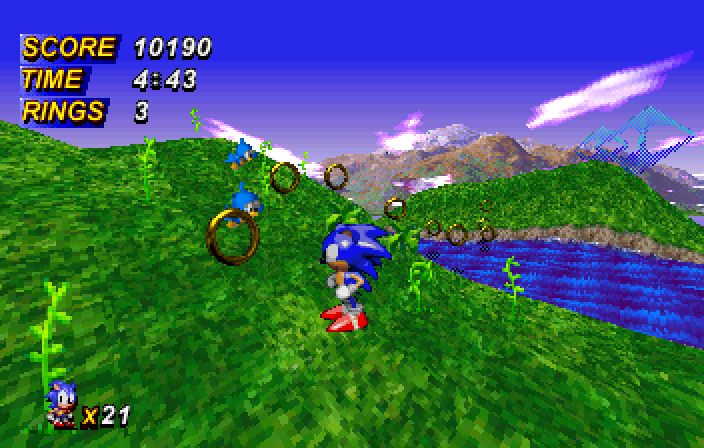
One glaring omission in the Saturn's library was that of Sonic the Hedgehog, Sega's mascot and console-seller. The troubled development of Sonic Xtreme is a whole story that I cannot cover here in much detail. The short version is that Sonic's creator, Yuji Naka and Sonic Team focused on Nights instead and left the work to a less experienced US-based team. While Sega released Sonic 3D Blast a port of the Genesis/Mega Drive game, Sonic Jam a compilation of the first three Sonic games and a 3D stage, and finally Sonic R, a 3D racing game. The lack of a proper 3D Sonic title would negatively affect Saturn sales in the West throughout the console's life. Sonic Xtreme would've been the Saturn's killer title and would've probably shipped a few million consoles.
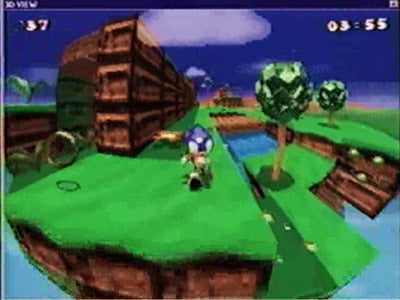
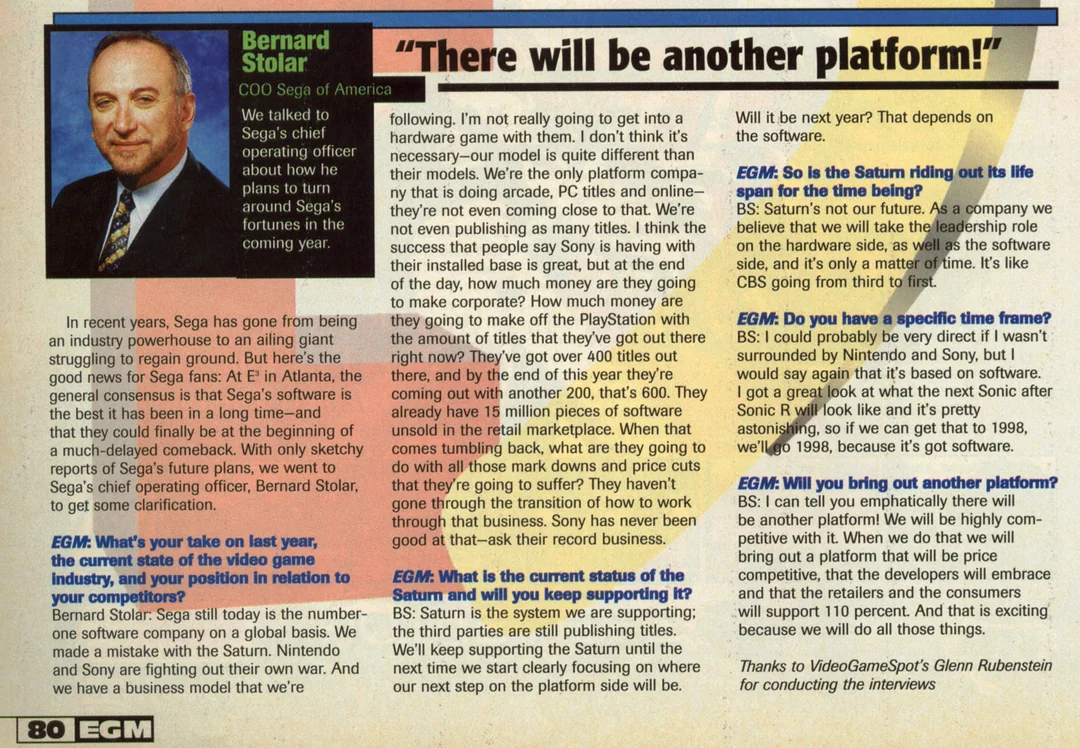
The year 1997 was really when Sega and the Saturn started to suffer, a first major hit to the Saturn in Japan was the release of Final Fantasy VII which broke the somewhat-competitive market between the Saturn and PlayStation and led to the PlayStation dominating in Japan. In the West, the Saturn was essentially in terminal decline, the number of games for the Saturn halved in 1997 compared to 1996 and Sega already had eyes on their next console, the Dreamcast. One thing to note is that the famous Bernie Stolar quote "Saturn is not our future" was taken out of context and improperly remembered by many people, the image below will be the full article so the reader can determine for oneself.
As mentioned, Sega was suffering enormous financial losses in 1997 and 1998. The West got 8 games for the entirety of 1998. A pathetic showing as Sega focused all their energies on the Dreamcast while the console limped on in Japan. Compared to the rest of Sega's consoles, the Saturn is in the Webmaster's opinion the weakest in terms of libraries. It is sadly the case that the Saturn's run in the mid-to-late 1990s severely damaged Sega's financial health entering the Dreamcast's lifespan. Sega was counting on the Dreamcast to save the company or they'll sink into the abyss of failed companies. The button below links to the development of the Sega Dreamcast.
 ENTER DEVELOPMENT